Why Is Pluto Not a Planet? The Three-Rule Test It Failed
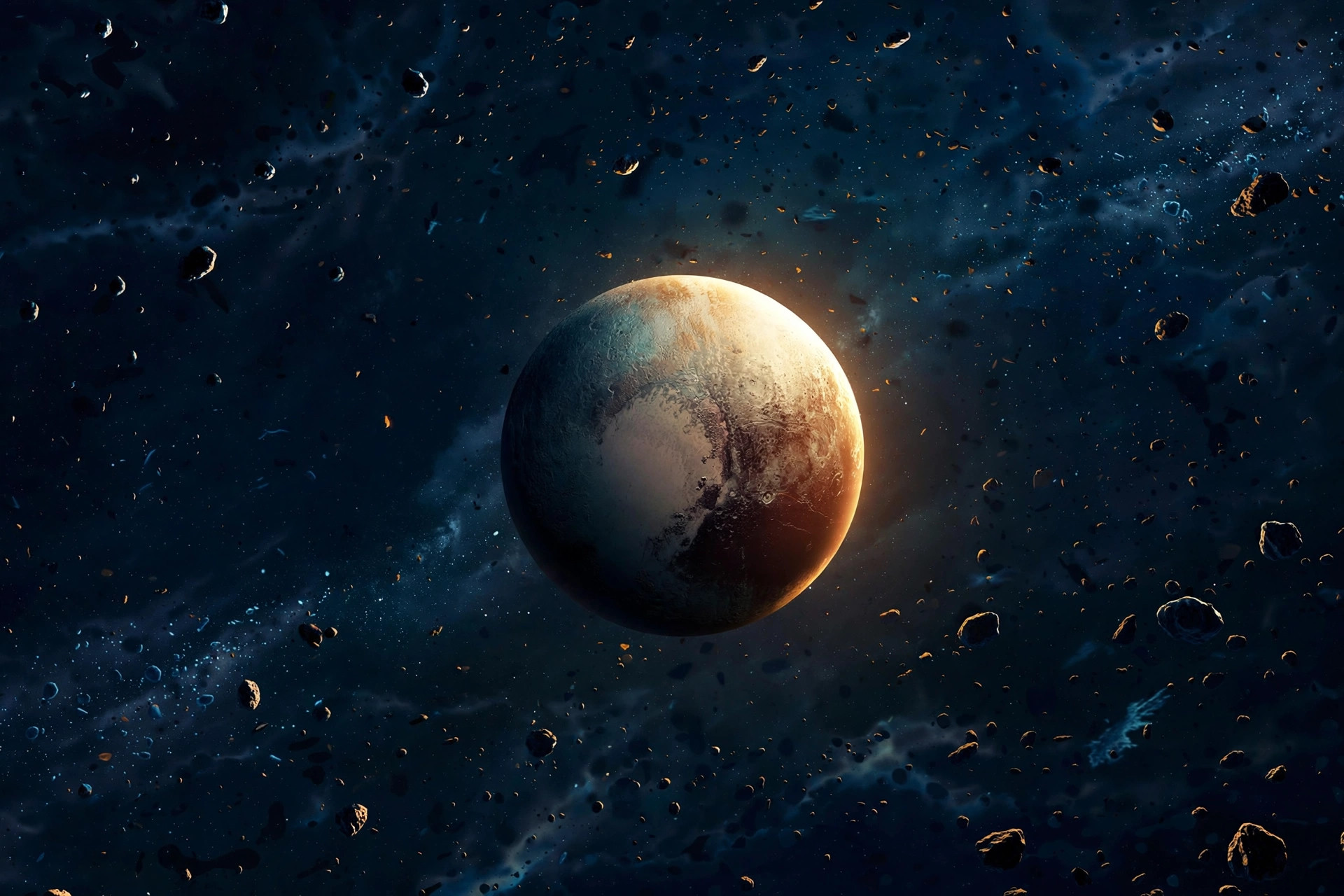
Pluto is not a planet because it fails one of the three rules astronomers set in 2006 — it has not cleared its neighbourhood of other icy bodies in the Kuiper Belt.
Why is Pluto not a planet? Because in 2006 astronomers finally wrote down what a planet actually is — and Pluto fails one of the three tests. For 76 years after its discovery in 1930, Pluto was happily listed as the ninth planet. Then, on 24 August 2006, the International Astronomical Union (IAU) voted at its General Assembly in Prague on the first official definition of a planet. Pluto met two of the three rules, missed the third, and was reclassified as a dwarf planet.
The three rules are simple. A planet must orbit the Sun, must be massive enough for its own gravity to pull it into a nearly round shape, and must have "cleared the neighbourhood" around its orbit — meaning it is gravitationally dominant there, having swept up, captured or flung away most other objects in its path. Earth passes all three, as do Mercury, Venus, Mars, Jupiter, Saturn, Uranus and Neptune. Pluto passes the first two: it circles the Sun, and it is round. It fails the third.
Why is Pluto not a planet? It shares its orbit with the Kuiper Belt
Pluto lives in the Kuiper Belt, a vast doughnut-shaped ring of icy worlds, rocks and comets beyond Neptune, about 5.9 billion kilometres from the Sun. Pluto is one of the biggest objects there, but it is far from alone — it shares its lane with thousands of similar icy bodies, and its gravity is not strong enough to clear them away. Earth, by contrast, dominates its orbit completely. That is the whole difference: Pluto is a big fish in a crowded pond, not the boss of its neighbourhood.
The discovery that forced the decision came in 2005, when astronomer Mike Brown's team found Eris, a Kuiper Belt object almost exactly Pluto's size and about 27% more massive. If Pluto stayed a planet, Eris had to be the tenth — and more Pluto-sized worlds were being found every year. Rather than let the planet count grow without limit, the IAU drew a line, and Pluto landed on the dwarf-planet side of it. There are now five officially recognised dwarf planets: Pluto, Eris, Haumea, Makemake and Ceres.
Nothing about Pluto itself changed. It still takes about 248 Earth years to complete one orbit, still has five moons — Charon is the largest — and when NASA's New Horizons spacecraft flew past in July 2015 it revealed a stunning world with a heart-shaped plain of frozen nitrogen, towering ice mountains and a thin blue haze. Like the Moon drifting away from Earth, Pluto's story is a reminder that science updates its labels when the evidence demands it. Pluto did not shrink or vanish; astronomers simply gave its true neighbourhood a name.
More mind-blowing facts
 Space
Why Does the Moon Look Bigger on the Horizon? The Moon Illusion Explained
Why does the Moon look bigger on the horizon? It does not — photographs prove the disc is the same size. The Moon illusion is your brain misjudging distance, not the Moon changing size.
 Space
Why Is Mars Red? The Rusty Dust That Paints the Red Planet
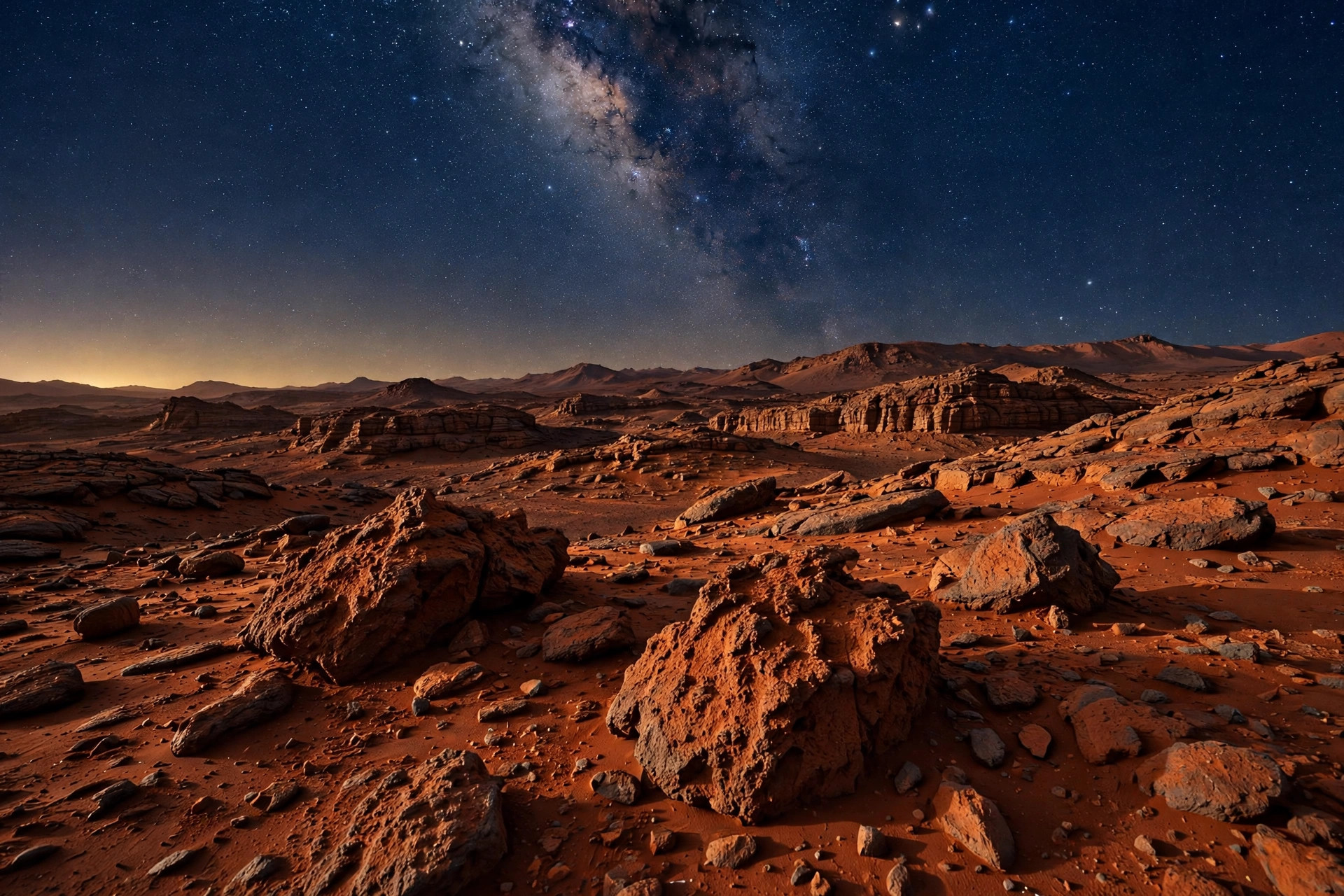
Why is Mars red? Iron in its rocks oxidised into rust, crumbled into fine dust and was blown across the whole planet — and a 2025 study suggests much of that rusting happened while Mars still had liquid water.
 Space
What Causes the Northern Lights? The Solar Science Explained
The northern lights start on the Sun, 150 million kilometres away. Here is the journey those particles take before the sky turns green.