Why Do We Say "Break a Leg"? The Theatre Superstition Explained
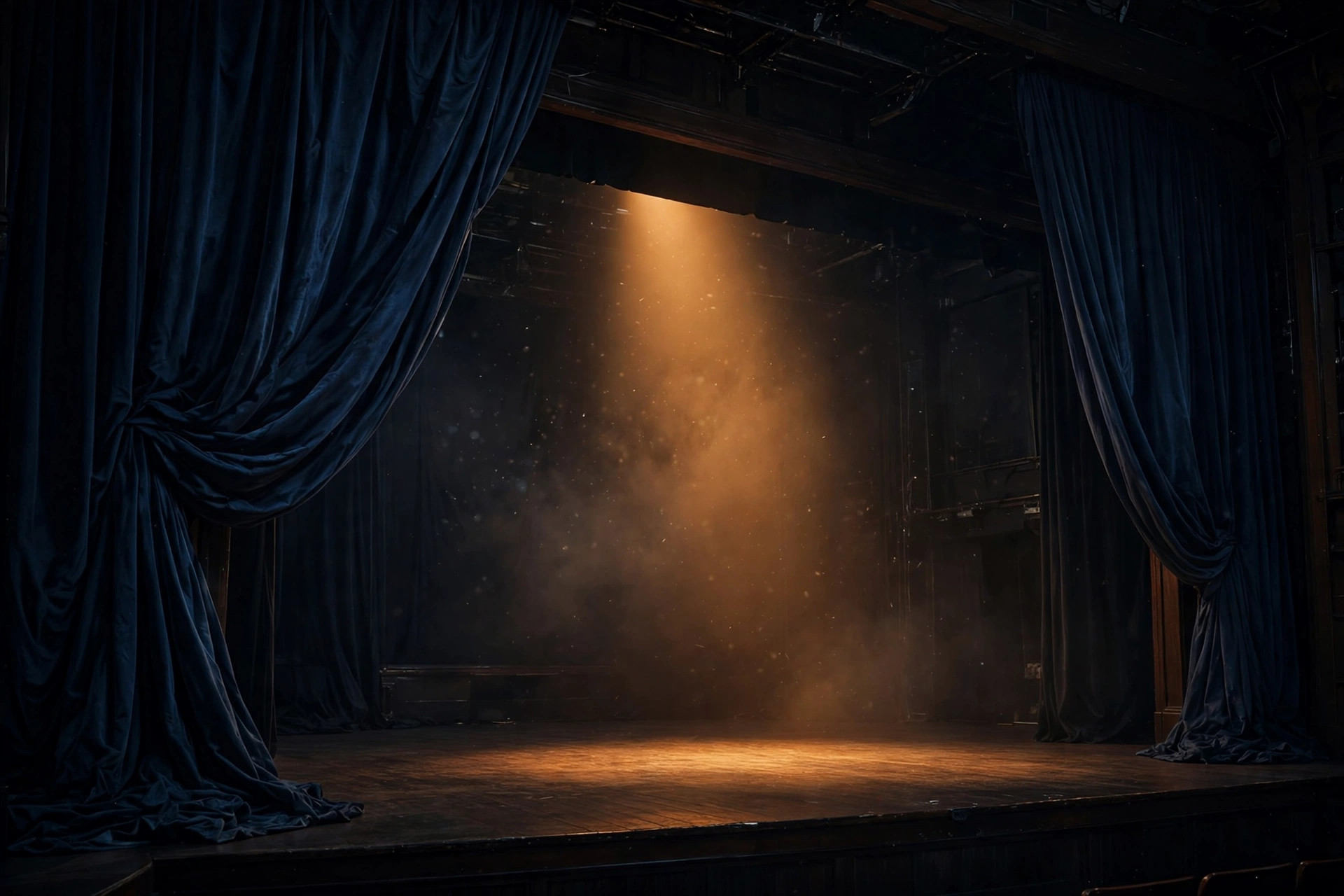
We say "break a leg" because theatre folk believe wishing a performer "good luck" will jinx the show — so they wish the opposite instead, hoping fate returns the favour.
Why do we say "break a leg"? Because in the theatre, wishing someone "good luck" is considered bad luck. Actors are famously superstitious, and the tradition is to wish a performer the opposite of what you want — a small disaster — so that fate, fooled by the insult, delivers success instead. Saying "break a leg" before a show is really saying "have a brilliant performance", dressed up as a curse to dodge a jinx.
The idea behind it is called counter-jinxing: directly wishing someone good fortune draws the attention of fate, or of envious spirits, and invites them to spoil it. So performers wish each other something bad instead, reasoning that fate will grant the opposite. The earliest printed example comes from a 1921 essay in the British magazine The New Statesman, where Robert Wilson Lynd wrote that in horse racing and the theatre, instead of saying "good luck" you should say something insulting, "such as, 'May you break your leg!'" By the late 1930s the phrase was recorded in American theatrical memoirs as standard backstage language.
Why do we say "break a leg"? The German phrase behind the English one
The exact origin of the wording remains uncertain — linguists call it obscure — but the strongest lead points to Europe. German speakers had a similar well-wishing phrase, Hals- und Beinbruch, literally "neck and leg break", used in hunting and in the theatre. It may itself come from the Yiddish blessing hatslokhe un brokhe, meaning "success and blessing", which sounds strikingly similar to the German words. German-speaking Jewish performers arriving in American vaudeville and Broadway in the 1920s plausibly carried the phrase with them, and it was translated literally into English as "break a leg".
Many popular explanations, though, are myths. There is no record of Elizabethan actors using the phrase for bowing, no evidence that John Wilkes Booth's broken leg after assassinating Abraham Lincoln in 1865 inspired it, and no proof that it refers to "breaking" the leg line — the side curtains framing a stage — to earn a fee. The honest answer is that the superstition is older than the phrase, and the phrase arrived in English in the 1920s and 1930s, probably via German and Yiddish theatre. It sits alongside other stage superstitions, like never calling Shakespeare's Macbeth by name inside a theatre, as proof that even today performers would rather risk a broken leg than a jinxed opening night. Like knocking on wood for luck, it is a small ritual that survives because nobody wants to be the one who tempts fate.
More mind-blowing facts
 History
What Was the First Speeding Ticket? 8 mph in 1896
The first speeding ticket in history was issued for driving at 8 mph — four times the legal limit of 2 mph — and the officer who caught the driver was on a bicycle.
 History
Why Did Einstein Turn Down the Presidency of Israel?
In November 1952, Albert Einstein was offered the presidency of Israel. He declined within a day — and his reason was strikingly honest.
 History
Why Are Black Cats Unlucky? The Real History Behind the Superstition
A black cat crossing your path is one of the oldest bad-luck warnings in the West — yet the fear is not ancient, universal, or based on anything the cat does.