Why Is Mars Red? The Rusty Dust That Paints the Red Planet
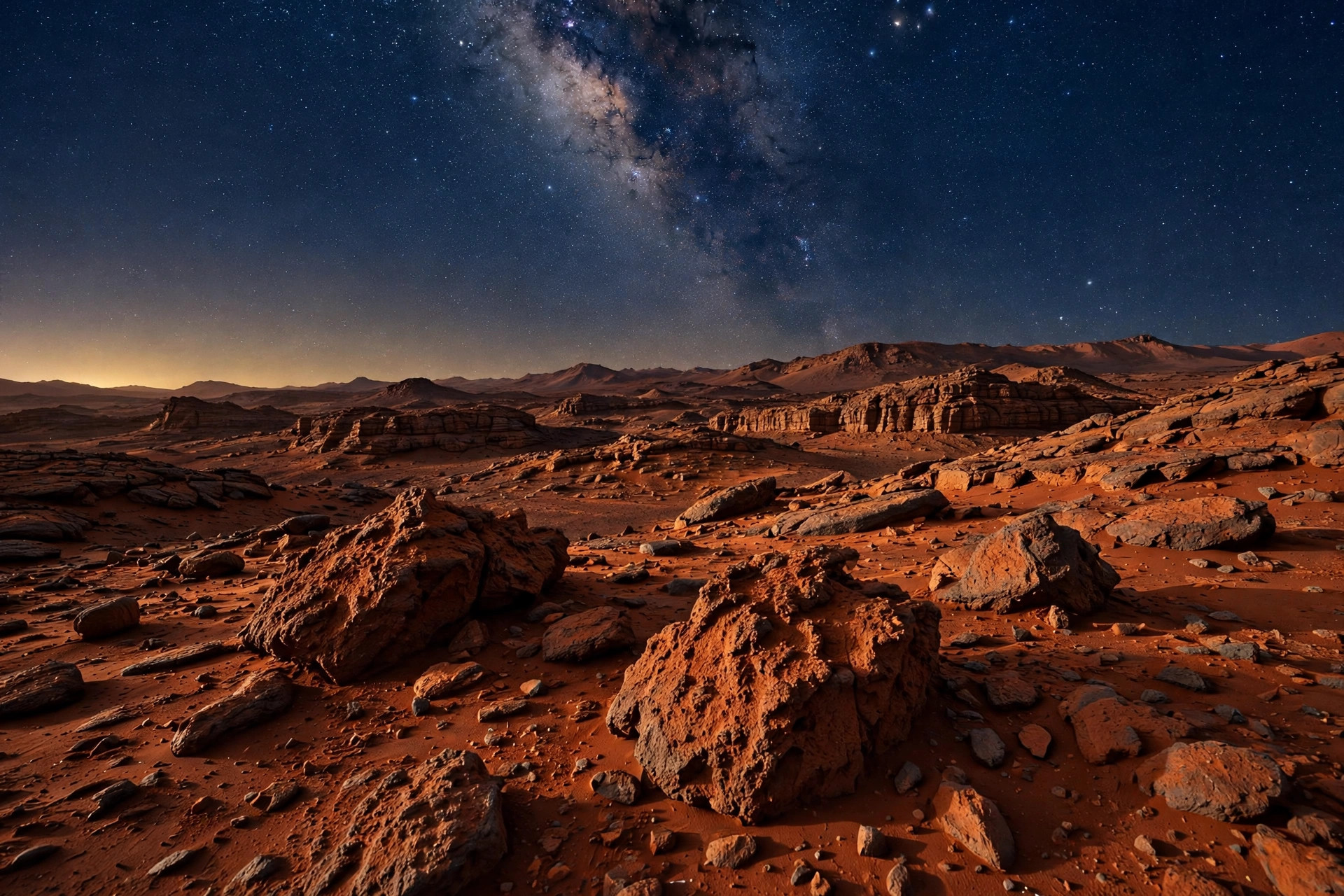
Why is Mars red? Iron in its rocks oxidised into rust, crumbled into fine dust and was blown across the whole planet — and a 2025 study suggests much of that rusting happened while Mars still had liquid water.
Why is Mars red? Because the whole planet is rusty. Mars is rich in iron, and over billions of years that iron reacted with oxygen and turned into iron oxide — the same family of compounds as the rust on an old bicycle left out in the rain. The rusty rock crumbled into dust finer than flour, and Martian winds and planet-wide dust storms spread it everywhere, coating rocks, soil and even the thin air. From Earth, the entire planet looks red.
The red is only skin-deep. Mars itself is built largely from dark volcanic basalt, similar to the rock that forms Hawaii and Iceland. When NASA's Curiosity rover drilled a few centimetres into rocks in Gale Crater, the powder that came out was grey, not red. The famous colour is a thin coat of dust on top of a dark world. Up close, in fact, the ground often looks more like butterscotch or caramel brown than the deep red we see through telescopes — the dust tints the landscape rather than colouring it through.
Why is Mars red? A 2025 study changed the answer
For decades, scientists believed the main culprit was hematite, an iron oxide that forms slowly under dry conditions. That suggested Mars rusted gradually, long after its early wet period had ended. A study published in Nature Communications in 2025 challenged that idea. A team led by Adomas Valantinas of Brown University recreated Martian dust in the lab, matching its chemistry to data from NASA and European Space Agency orbiters and rovers, and found the best match was a mix of basalt and ferrihydrite — a poorly crystalline iron oxide that contains water and forms quickly in cool, wet conditions.
If that identification is right, Mars did much of its rusting while it still had liquid water on its surface, roughly 3 billion years ago, rather than only after it became a desert. The ferrihydrite then survived, largely unchanged, in Mars's cold, dry climate for billions of years. The finding is not yet proven — definitive confirmation will need actual Martian samples, such as those collected by NASA's Perseverance rover, brought back to Earth — but it already rewrites the story: the Red Planet's colour may be a memory of a wetter Mars. Like Pluto's reclassification, it is a reminder that even the most familiar facts about our neighbours can change when new evidence arrives.
More mind-blowing facts
 Space
Why Does the Moon Look Bigger on the Horizon? The Moon Illusion Explained
Why does the Moon look bigger on the horizon? It does not — photographs prove the disc is the same size. The Moon illusion is your brain misjudging distance, not the Moon changing size.
 Space
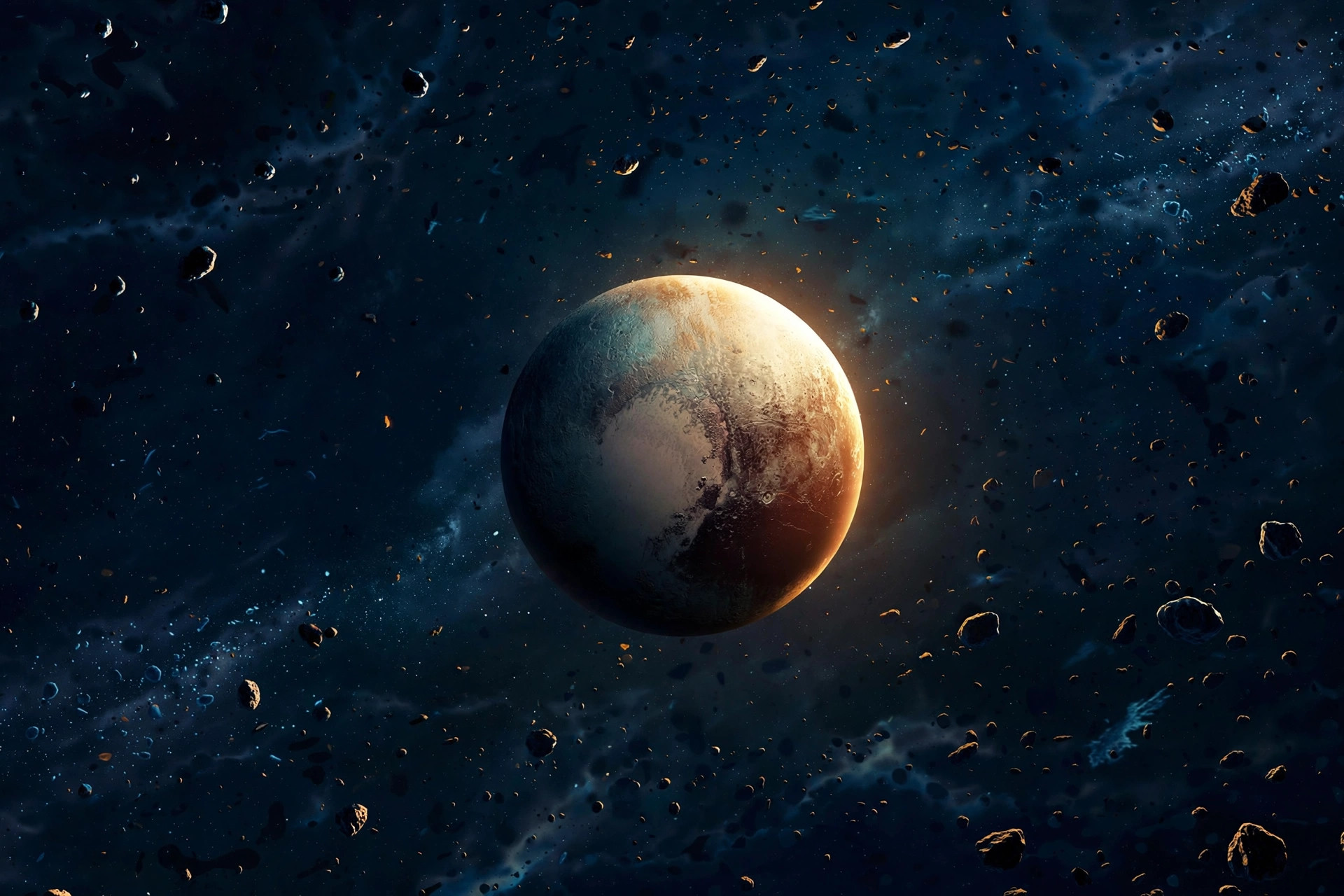
Why Is Pluto Not a Planet? The Three-Rule Test It Failed
Pluto is not a planet because it fails one of the three rules astronomers set in 2006 — it has not cleared its neighbourhood of other icy bodies in the Kuiper Belt.
 Space
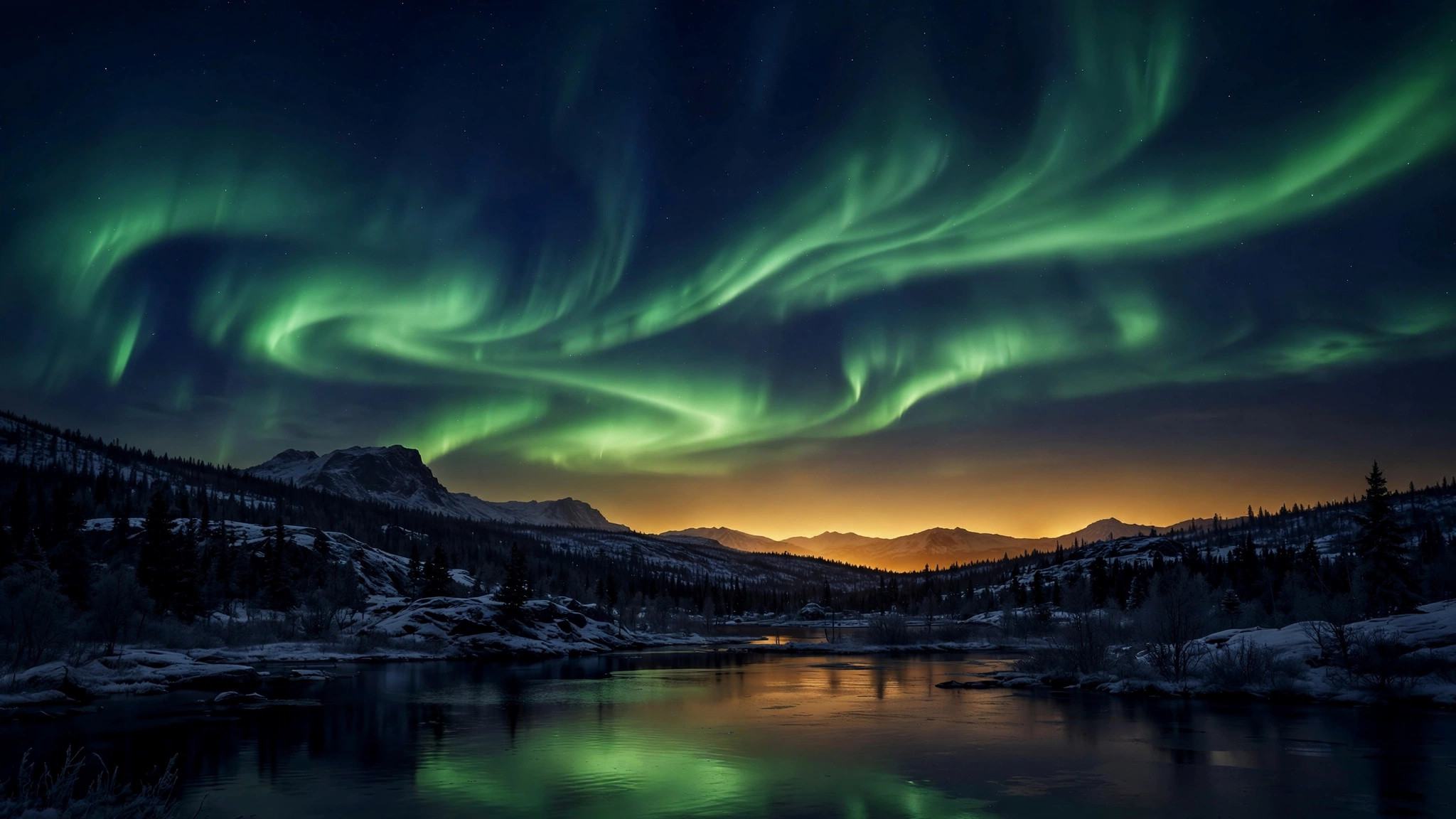
What Causes the Northern Lights? The Solar Science Explained
The northern lights start on the Sun, 150 million kilometres away. Here is the journey those particles take before the sky turns green.