What Was the First Speeding Ticket? 8 mph in 1896
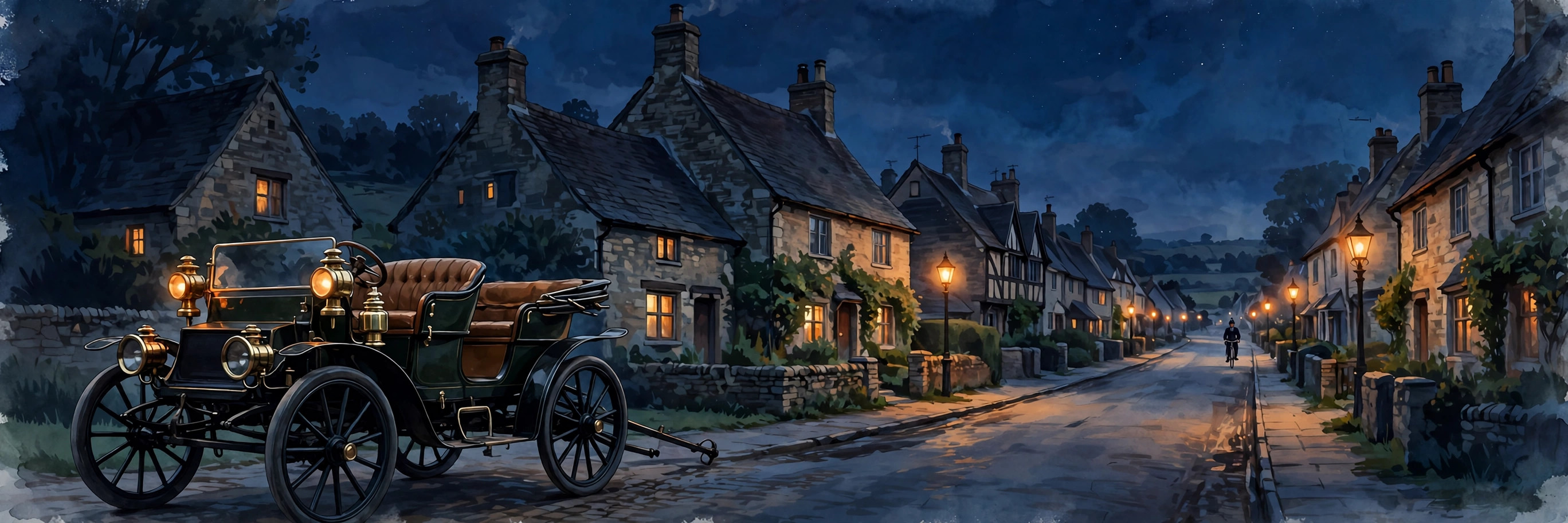
The first speeding ticket in history was issued for driving at 8 mph — four times the legal limit of 2 mph — and the officer who caught the driver was on a bicycle.
What was the first speeding ticket? It was issued on 28 January 1896 to a British motorist named Walter Arnold, who was caught driving his Benz motor carriage through Paddock Wood, Kent, at a reckless 8 mph — four times the legal speed limit of 2 mph. The policeman who caught him was riding a bicycle, and it still took five miles to run him down.
Arnold was a motor enthusiast and dealer who had imported one of the first cars in the world — a Benz Patent-Motorwagen, first produced in 1886 — into Britain. The law he broke was the Locomotive Act of 1865, better known as the Red Flag Act. It treated early motor vehicles as locomotives: they could travel at no more than 2 mph in villages and 4 mph in towns, had to be operated by at least three people, and had to be preceded by a man on foot waving a red flag. Arnold was doing none of those things.
What was the first speeding ticket's punishment?
When the constable finally caught up with him after a five-mile chase, Arnold was charged on four counts: using a locomotive without a horse on a public road; letting it be operated by fewer than three people; travelling faster than two miles per hour; and failing to display his name and address on the vehicle — the Victorian equivalent of driving without a number plate.
He appeared before a local magistrate on 30 January 1896 and was found guilty on all four counts. The total fine was £4 7s — about £260 in today's money — of which ten shillings was for the speeding charge itself. He also lost his licence for 28 days. Guinness World Records lists Arnold as the first person charged with a speeding offence — though a Glasgow salesman, George Johnston, had been prosecuted for a motoring offence earlier and acquitted, making Arnold the first convicted.
Arnold's drive may not have been entirely innocent. He was about to start selling his own Arnold Motor Carriage, a locally built variant of the Benz, and the stunt drew exactly the publicity early motorists wanted. Their campaign worked: later in 1896, the Locomotives on Highways Act raised the speed limit to 14 mph and scrapped the red-flag rule altogether. Arnold himself joined the celebratory London-to-Brighton Emancipation Run that November.
America caught up three years later. In 1899, New York cab driver Jacob German became the first American fined for speeding — doing 12 mph in an 8 mph zone in an electric taxi, chased down by yet another policeman on a bicycle.
From 8 mph to the motorway in a single lifetime: the first speeding ticket was less about speed than about a world changing gear. For another story of America keeping its own rules, see why the US still uses Fahrenheit.
Questions, answered
What was the first speeding ticket's punishment?
When the constable finally caught up with him after a five-mile chase, Arnold was charged on four counts: using a locomotive without a horse on a public road; letting it be operated by fewer than three people; travelling faster than two miles per hour; and failing to display his name and address on the vehicle — the Victorian equivalent of driving
More mind-blowing facts
 History
Why Did Einstein Turn Down the Presidency of Israel?
In November 1952, Albert Einstein was offered the presidency of Israel. He declined within a day — and his reason was strikingly honest.
 History
Why Do We Say "Break a Leg"? The Theatre Superstition Explained
We say "break a leg" because theatre folk believe wishing a performer "good luck" will jinx the show — so they wish the opposite instead, hoping fate returns the favour.
 History
Why Are Black Cats Unlucky? The Real History Behind the Superstition
A black cat crossing your path is one of the oldest bad-luck warnings in the West — yet the fear is not ancient, universal, or based on anything the cat does.