Why Do Mosquitoes Bite Some People More? The Mosquito Magnet Science
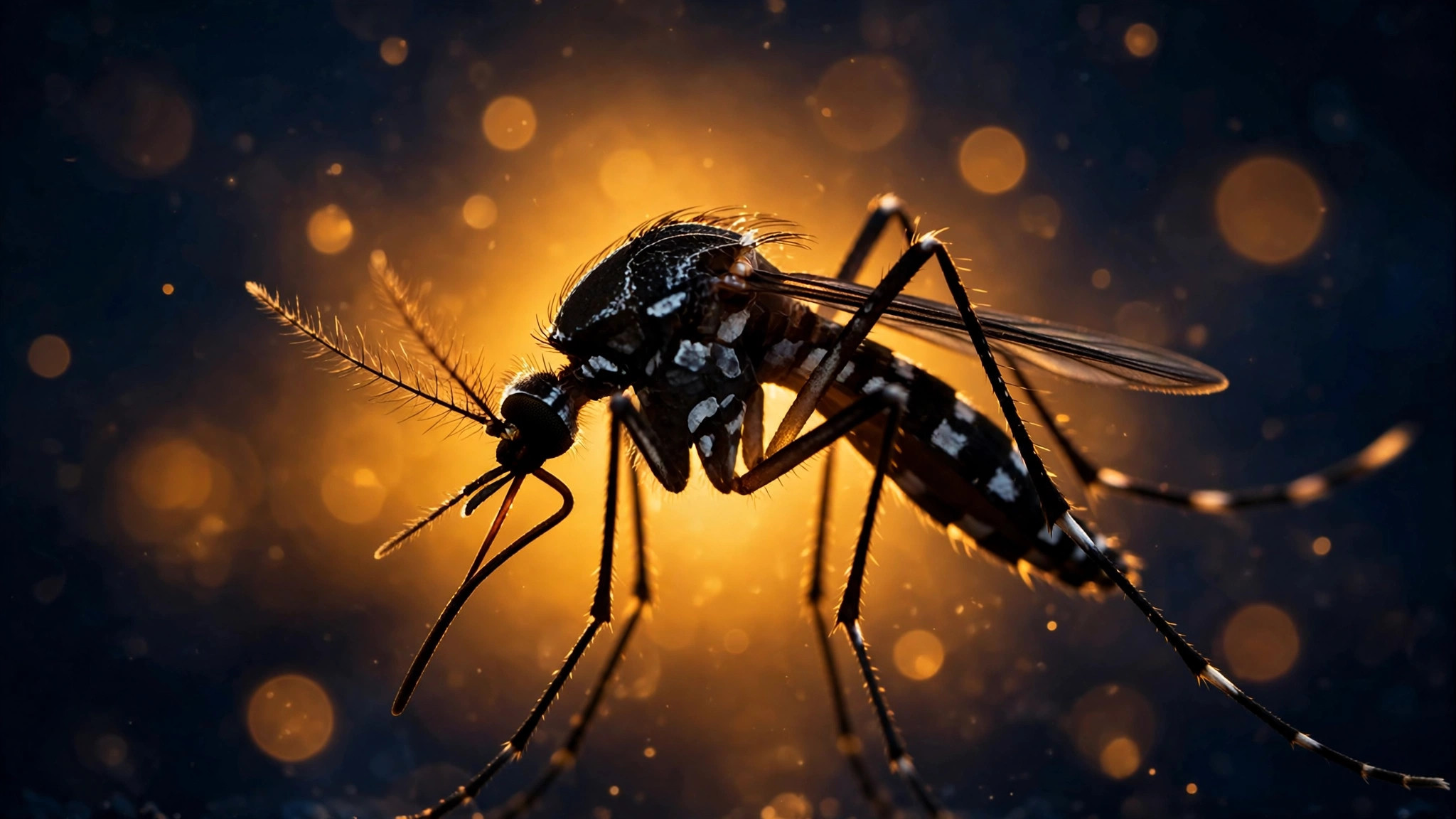
Mosquito magnets are real, and it has almost nothing to do with sweet blood. Your skin's chemistry — largely set by genetics and skin bacteria — decides how delicious you smell to a mosquito.
Why do mosquitoes bite some people more than everyone else at the same barbecue? One guest leaves covered in bites while another, sitting inches away, is untouched. It feels personal, and in a sense it is. Mosquitoes do not choose at random — they follow a trail of signals, and some people's signals are far louder than others.
Only female mosquitoes bite. They need protein from blood to make eggs, and they have evolved a layered system for finding the person who will provide it.
Why do mosquitoes bite some people more? Follow the signals
A hunting female works through cues in sequence. From tens of metres away, she detects carbon dioxide — the plume of breath that tells her a warm animal is near. Closer in, body heat and moisture guide her approach. At close range, the deciding factor is skin odour: a personal blend of volatile compounds released from the skin.
The clearest evidence comes from a Rockefeller University study published in Cell in 2022. Volunteers wore nylon stockings to capture their skin odour, and researchers measured how strongly Aedes aegypti mosquitoes were drawn to each sample. The differences were dramatic and durable. The most attractive person was about 100 times more appealing to the mosquitoes than the least attractive, and people's rankings barely changed when the test was repeated months later.
The chemistry of a mosquito magnet
The strongest known signal is a group of fatty compounds called carboxylic acids. They are produced in sebum, the skin's natural oil, and released after skin bacteria break that oil down. People whose skin produces more of these acids are consistently more attractive to mosquitoes. Because skin chemistry is shaped by genetics and a fairly stable community of skin microbes, being a mosquito magnet tends to be a long-term trait — not something one shower will change.
Other factors can raise your signal temporarily. Exercise increases carbon dioxide, heat, lactic acid and sweat all at once. Pregnancy has a similar effect — more exhaled carbon dioxide and a warmer abdomen — which is why pregnant women attract noticeably more bites in studies. Drinking beer has also been linked to greater attraction in some experiments. Wearing dark clothing adds a visual target. Claims about "sweet blood" or a single preferred blood type, by contrast, are not well supported; the evidence for blood type is mixed and far weaker than the skin-chemistry effect.
For another insect running remarkable chemistry of its own, see how fireflies glow, and for animal senses far beyond ours, the mantis shrimp that sees 16 colour channels.
So the bites are not bad luck. To a mosquito, some people simply broadcast a stronger, richer signal — written in skin chemistry long before the evening begins.
More mind-blowing facts
 Animals
Why Do Dogs Tilt Their Heads? The Science Behind the Adorable Tilt
Why do dogs tilt their heads? They are tuning their ears to locate a sound, seeing past their own muzzle, and concentrating on words they recognise — a sign your dog is paying close attention.
 Animals
How Do Bees Make Honey? From Flower Nectar to Golden Jar
Bees make honey by collecting flower nectar, breaking down its sugars with enzymes, and fanning away most of its water until the thick golden result can be sealed in wax.
 Animals
Do Goldfish Have a Three-Second Memory? The Myth Debunked
The three-second goldfish memory is one of the most repeated animal myths — and it is wrong. Goldfish can remember for weeks or months.