Why Do Cats Purr? It Is Not Just Happiness
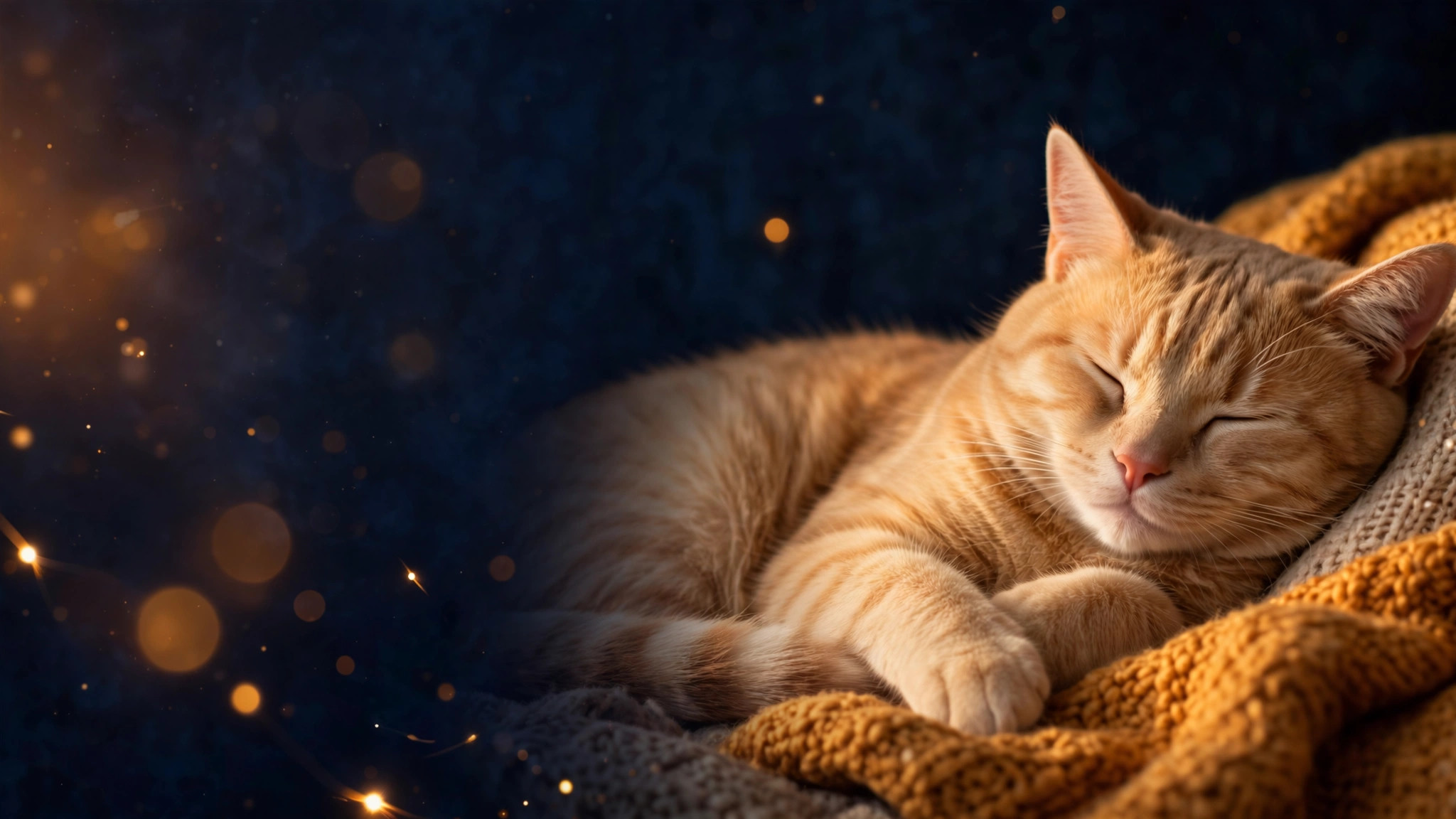
Cats purr when they are content, but also when they are frightened or hurt. That double life is the clue to what the purr is really for.
Why do cats purr? Most owners hear it as a simple sign of happiness, and often it is. A cat curled on a lap, eyes half closed, is usually telling you it feels safe. But cats also purr at the vet, when they are injured, and even while giving birth — moments when happiness makes no sense at all.
That contradiction is the clue. Purring is not one message. It is a tool cats use for communication, comfort and, researchers think, healing.
Why do cats purr at 25 to 150 Hertz?
A purr starts in the brain. Signals cause the muscles around the cat's voice box to twitch rapidly, and because it happens on both the in-breath and the out-breath, the sound can continue almost without a pause. Kittens are born blind and deaf, so a mother's purr works like a guide: its vibrations help newborns find her and feed during their first days.
The striking detail is the frequency. Cats purr at roughly 25 to 150 Hertz. Studies summarised by researchers at the University of California, Davis note that sound frequencies in this range have been linked to improved bone density and to healing in bones and soft tissue. That may explain why cats often purr while resting after an injury — a low-cost way to keep bones and muscles stimulated when they cannot move around.
It is a hypothesis, not a proven cure, and vets are careful about the claim. But it fits the pattern: purring costs a resting cat very little energy, yet happens exactly when recovery help would matter most.
A purr can also be a request
Adult cats rarely meow at each other, but they have learned that people respond to sound. Some pet cats use a special solicitation purr with a high-pitched cry hidden inside it, similar in character to a baby's cry. Humans find that version noticeably harder to ignore — which is, of course, the point when breakfast is late.
Body language tells you which purr you are hearing. A loose body, slow blinks and kneading paws suggest contentment. A tense body, flattened ears or hiding suggest self-soothing instead. If a cat suddenly purrs while also going off its food or moving stiffly, treat it as a reason to call the vet, not reassurance that all is well.
Cats are full of surprising biology — see also how the mantis shrimp sees far more colour channels than we do, and why wombat droppings come out as cubes.
So the purr is best read as a sentence, not a single word. Sometimes it says "stay here". Sometimes it says "feed me". And sometimes, quietly, it may be a cat doing its best to mend itself.
Questions, answered
Why do cats purr at 25 to 150 Hertz?
A purr starts in the brain. Signals cause the muscles around the cat's voice box to twitch rapidly, and because it happens on both the in-breath and the out-breath, the sound can continue almost without a pause.
More mind-blowing facts
 Animals
Why Do Dogs Tilt Their Heads? The Science Behind the Adorable Tilt
Why do dogs tilt their heads? They are tuning their ears to locate a sound, seeing past their own muzzle, and concentrating on words they recognise — a sign your dog is paying close attention.
 Animals
How Do Bees Make Honey? From Flower Nectar to Golden Jar
Bees make honey by collecting flower nectar, breaking down its sugars with enzymes, and fanning away most of its water until the thick golden result can be sealed in wax.
 Animals
Do Goldfish Have a Three-Second Memory? The Myth Debunked
The three-second goldfish memory is one of the most repeated animal myths — and it is wrong. Goldfish can remember for weeks or months.