Why Is the Ocean Salty but Rivers Are Not?
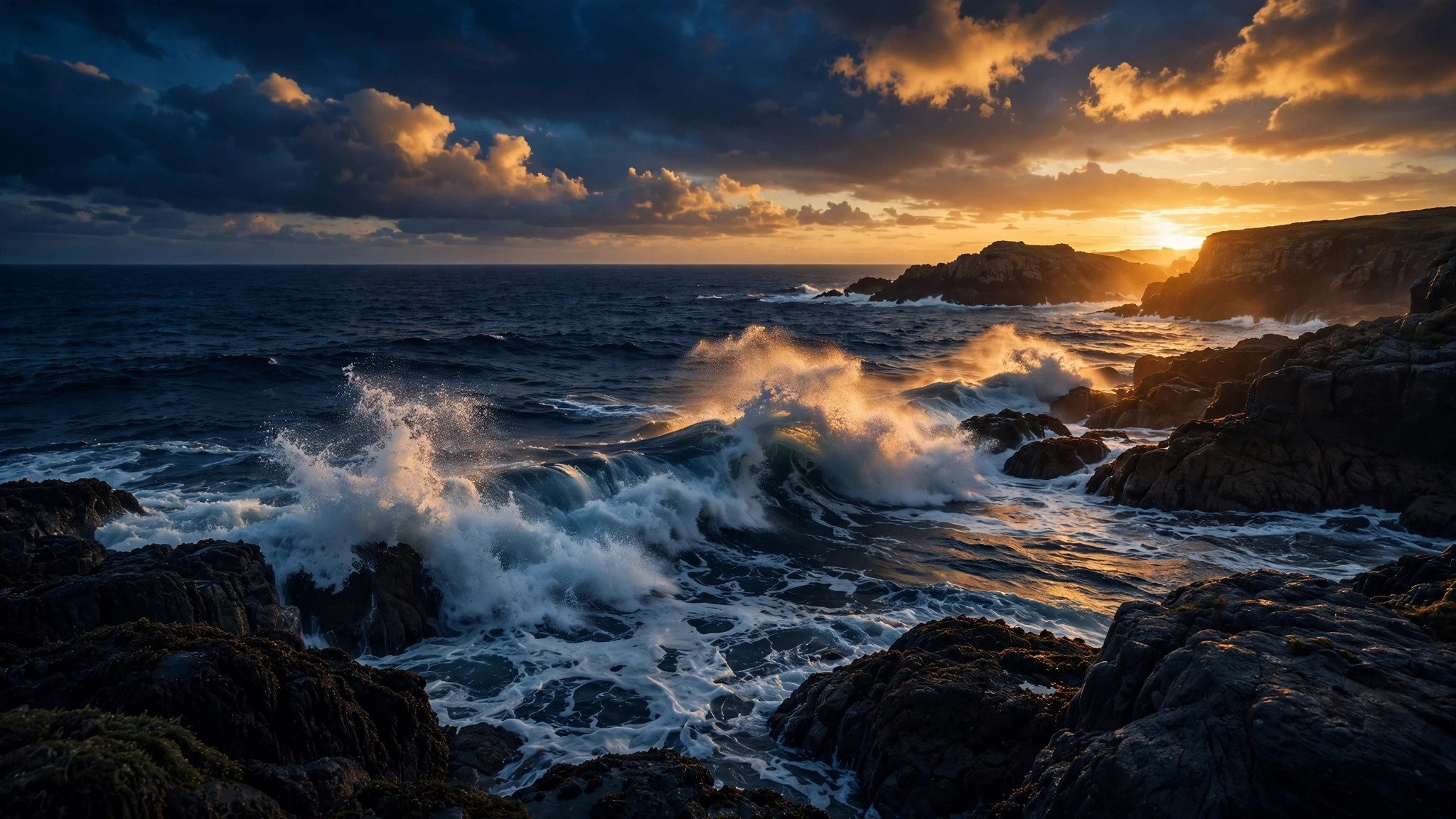
Every river tastes fresh, yet every ocean tastes salty. The difference is time — and the fact that the sea has nowhere for its salt to go.
Why is the ocean salty when the rivers flowing into it taste fresh? It feels like a contradiction, until you follow a single raindrop. Rain is slightly acidic, and as it runs over land it slowly weathers rocks, dissolving tiny amounts of minerals and salts. Rivers carry that load to the sea — and there, crucially, it stays.
The ocean is not salty because something made it that way in one event. It became salty grain by grain, over billions of years.
Why is the ocean salty? Two sources add the salt
NOAA points to two main sources. The first is runoff from the land. Rainwater picks up dissolved ions from weathered rock, streams and rivers deliver them to the coast, and the ocean collects the salts from every river that feeds it. NOAA estimates that rivers worldwide carry about four billion tonnes of dissolved salts to the ocean each year, with rivers and streams from the United States alone contributing hundreds of millions of tonnes of dissolved solids annually.
The second source is the seafloor itself. Seawater seeps into cracks, is heated by magma, and reacts with the surrounding rock before rising back through hydrothermal vents, carrying metals and minerals with it. Underwater volcanic eruptions add more material directly.
Average seawater is about 3.5 per cent salt — roughly 35 grammes of dissolved salts in every kilogramme of water, mostly sodium and chloride.
Why do rivers stay fresh, then?
Rivers are moving water on its way somewhere else. Rain constantly replenishes them, so any dissolved minerals are flushed through rather than building up. The concentration stays far too low to taste.
The ocean works the opposite way. It is the final destination, and the water that leaves it does so mainly by evaporation — which leaves the salt behind. Pure water vapour rises, falls as rain, weathers more rock, and delivers a little more salt. Repeat that cycle for billions of years and a slightly salty early sea becomes the ocean we know.
That does not mean the ocean is still getting saltier at the same rate. NOAA notes that roughly as much salt is removed into sediments on the ocean floor as arrives, so today the input and output are broadly in balance.
Saltiness is not the same everywhere
Warm, dry regions with high evaporation tend to have saltier surface water, while areas near big river mouths or melting ice are fresher. Landlocked seas with little outflow can go much further — which is why some salt lakes are far saltier than any ocean.
For another water-and-weather extreme, see how lightning can be hotter than the surface of the Sun, and why the Eiffel Tower grows taller in summer heat.
So a mouthful of seawater is, in a sense, a taste of geology: rock, rain and time, concentrated in the largest basin on Earth.
Questions, answered
Why do rivers stay fresh, then?
Rivers are moving water on its way somewhere else. Rain constantly replenishes them, so any dissolved minerals are flushed through rather than building up. The concentration stays far too low to taste.
More mind-blowing facts
 Science
What Was the First Webcam? The Coffee Pot That Started It All
The first webcam was not built for fame or fortune. It was built so a handful of Cambridge researchers would stop climbing stairs for an empty coffee pot.
 Science
Why Do We See Lightning Before Thunder? Light Is Nearly a Million Times Faster Than Sound
Why do we see lightning before thunder? Both are born in the same instant — the flash is the discharge, the thunder is the air it superheats exploding outward. Light simply arrives first, by a huge margin.
 Science
How Do Airplanes Fly? The Real Science of Lift
Airplanes fly because their wings push air downward — and the air pushes back up. That reaction force, plus lower pressure above the wing, is lift.