Why Do We Get Hiccups? The Reflex That Hijacks Your Breathing
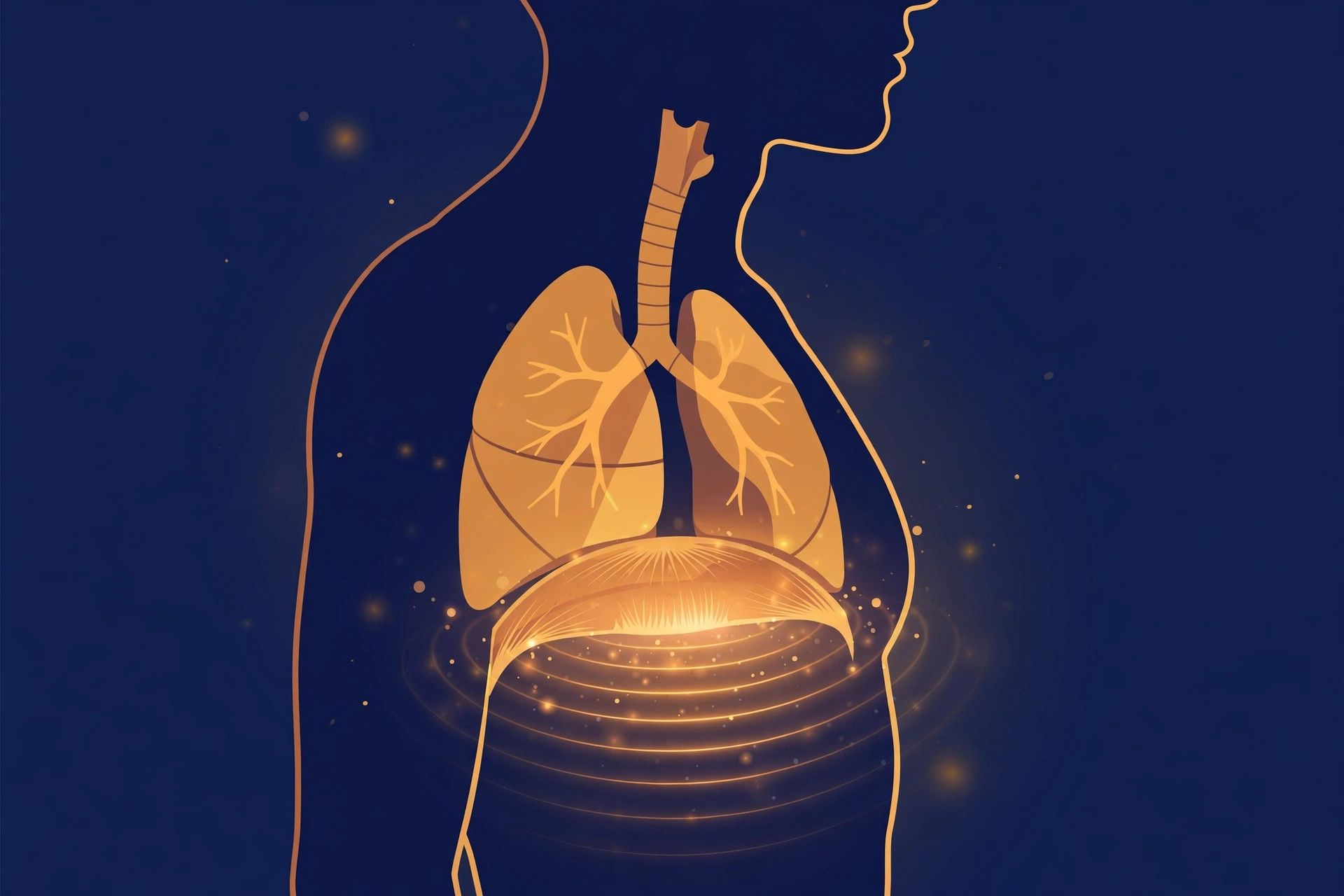
Why do we get hiccups? A hiccup is a two-part reflex: your diaphragm jerks down without warning, and a fraction of a second later your vocal cords snap shut — that snap makes the "hic" sound.
Why do we get hiccups? A hiccup is not a cough or a sneeze with a different sound — it is a short-circuit in the machinery of normal breathing. It starts with a sudden, involuntary contraction of the diaphragm, the dome-shaped muscle beneath your lungs that does most of the work of breathing. Air rushes in, and about 35 milliseconds later the glottis — the gap between your vocal cords — snaps shut, slamming the door on the incoming air. That snap is the "hic".
The spasm follows a reflex arc, a fixed neurological loop with three parts. Sensory nerves detect irritation somewhere along the route, a processing centre in the brainstem decides what to do, and motor nerves carry the order back out. The two nerves that matter most are the vagus nerve, which wanders from the brain down through the chest and gut, and the phrenic nerve, which connects directly to the diaphragm. When something irritates either nerve — a stomach swollen by a large meal, fizzy drink or gulp of air, spicy food, alcohol, or a sudden change of temperature — the signal races to the brainstem, and the brainstem fires the diaphragm and the voice box in the wrong order — a nerve reflex misfiring, much like brain freeze.
Why do we get hiccups? The triggers are everyday ones
Most bouts have no mysterious cause at all. Eating or drinking too quickly is the classic trigger: a rapidly expanding stomach presses on the diaphragm sitting just above it and irritates the nerves that share the hiccup pathway. Carbonated drinks do the same by filling the stomach with gas. Excitement, laughter and sudden fear can set the loop off too, because strong emotion activates every stage of the reflex arc at once. Hiccups lasting over 48 hours are called persistent; the cause is then usually nerve damage, acid reflux, a metabolic problem, or a brainstem disorder.
Home remedies work, when they work, by interrupting the same loop. Holding your breath or breathing into a paper bag raises carbon dioxide levels, which research has found can switch the reflex off at a certain threshold. Swallowing, sipping cold water or eating a spoonful of sugar stimulates the vagus nerve from the throat side. A device called the forced inspiratory suction and swallow tool combines both tricks at once.
The most famous case shows what happens when the loop never switches off. Charles Osborne, an Iowa farmer, fell while lifting a 350-pound hog on 13 June 1922 and started hiccupping — and did not stop for 68 years. He hiccupped an estimated 430 million times until the hiccups vanished as mysteriously as they had arrived in 1990. Guinness World Records still lists his as the longest attack of hiccups ever documented. Doctors who examined him believed the fall had damaged a tiny part of the brainstem that normally suppresses the reflex — the one switch that, in the rest of us, turns the hiccups off within minutes.
More mind-blowing facts
 Human Body
Why Do We Dream? What Your Brain Is Doing All Night
We dream mostly in REM sleep, when the brain replays the day's experiences, files memories into long-term storage and takes the sting out of difficult emotions.
 Human Body
Why Do We Get Goosebumps? The Ancient Reflex Explained
Goosebumps are a leftover from our furry ancestors — tiny muscles raising hairs that no longer keep us warm, fired by the same system as fight or flight.
 Human Body
Why Do We Say "Bless You" When Someone Sneezes?
A sneeze explodes out at highway speed — and for two thousand years, humans have felt the need to bless the sneezer. Here's why.