Why Do We Get Goosebumps? The Ancient Reflex Explained
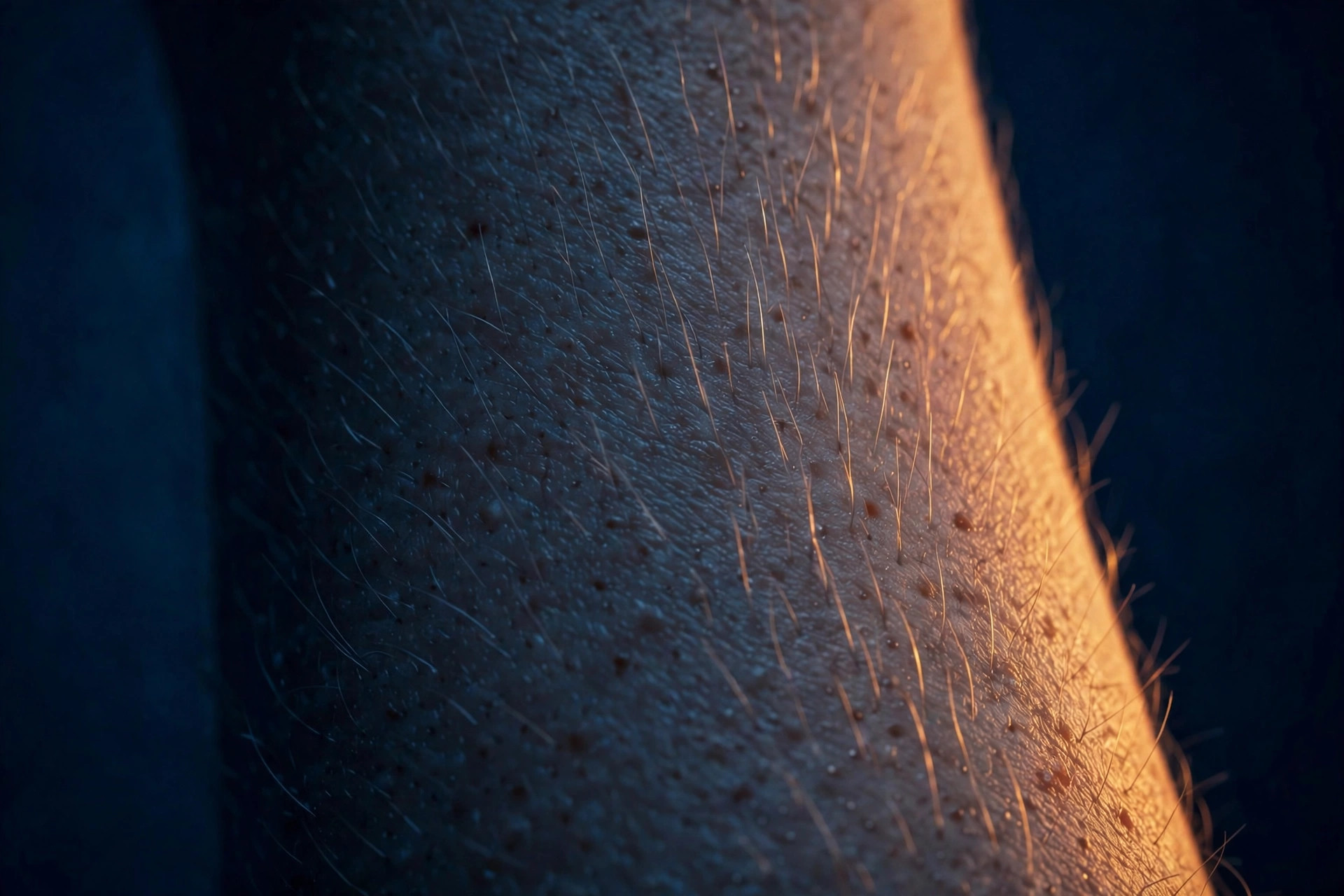
Goosebumps are a leftover from our furry ancestors — tiny muscles raising hairs that no longer keep us warm, fired by the same system as fight or flight.
Why do we get goosebumps? Because a reflex we inherited from furry ancestors is still wired into our skin. Each hair follicle has a tiny smooth muscle attached to it, the arrector pili muscle. When it contracts, it pulls the hair upright and dimples the skin around it into the familiar bumps. The trigger is the sympathetic nervous system — the same branch that drives the fight-or-flight response.
The medical name is piloerection, and the everyday name comes from the skin's resemblance to a plucked goose. The reaction is completely involuntary: you cannot decide to get goosebumps any more than you can decide to make your heart race.
Why do we get goosebumps in the cold, in fear, and from music?
Cold is the classic trigger. When skin temperature drops, sympathetic nerves release noradrenaline, the arrector pili muscles contract across the body, and the hairs lift. In a furry animal this traps a layer of still air close to the skin, adding insulation — a natural puffy jacket. It also makes the animal look bigger, which is why an angry cat fluffs up at a rival and a threatened porcupine raises its quills.
Humans lost most of our dense body hair long ago, so the insulation effect is now negligible. The wiring, however, stayed. Because the sympathetic nervous system also responds to emotion, the same reflex fires in fear, awe, excitement and even at a stirring piece of music. Your body does not distinguish much between "cold" and "moved": both send a flood of signals through the same nerves, and the hairs stand up either way.
That is also why goosebumps often arrive in waves rather than one by one. Nerves activate the tiny muscles in coordinated clusters, sending signals along neighbouring fibres and creating a rippling pattern across the skin.
Goosebumps do a second, hidden job
For years goosebumps were written off as a useless leftover. A 2020 study in the journal Cell complicated that story: researchers at Harvard found that the sympathetic nerve, the arrector pili muscle and hair-follicle stem cells form a single connected unit beneath the skin. In the short term, cold triggers the muscle contraction we see as goosebumps. Over longer cold exposure, the same signals activate dormant stem cells, encouraging new hair growth. It is a two-layer response — an immediate reaction and a slower regeneration signal — at least in mice, where the work was done.
Goosebumps are usually harmless and rarely signal a health problem. Like yawning, they are a reminder that much of the body runs on autopilot, using machinery far older than we are. We may have lost the fur, but we kept the reflex — a small, visible echo of the animals we once were.
Questions, answered
Why do we get goosebumps in the cold, in fear, and from music?
Cold is the classic trigger. When skin temperature drops, sympathetic nerves release noradrenaline, the arrector pili muscles contract across the body, and the hairs lift. In a furry animal this traps a layer of still air close to the skin, adding insulation — a natural puffy jacket.
More mind-blowing facts
 Human Body
Why Do We Get Hiccups? The Reflex That Hijacks Your Breathing
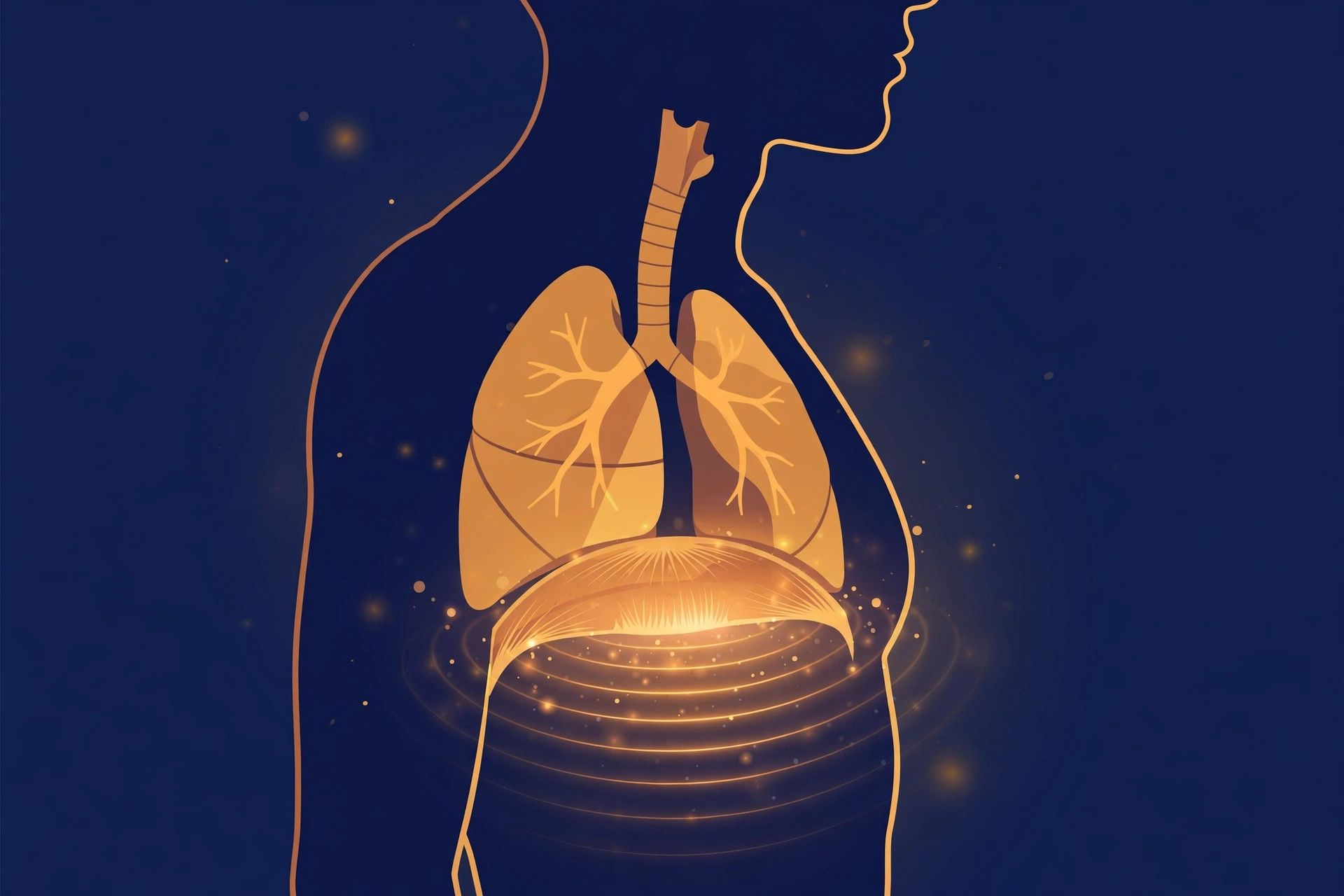
Why do we get hiccups? A hiccup is a two-part reflex: your diaphragm jerks down without warning, and a fraction of a second later your vocal cords snap shut — that snap makes the "hic" sound.
 Human Body
Why Do We Dream? What Your Brain Is Doing All Night
We dream mostly in REM sleep, when the brain replays the day's experiences, files memories into long-term storage and takes the sting out of difficult emotions.
 Human Body
Why Do We Say "Bless You" When Someone Sneezes?
A sneeze explodes out at highway speed — and for two thousand years, humans have felt the need to bless the sneezer. Here's why.