Mantis Shrimp Vision: The Animal That Sees 16 Colour Channels
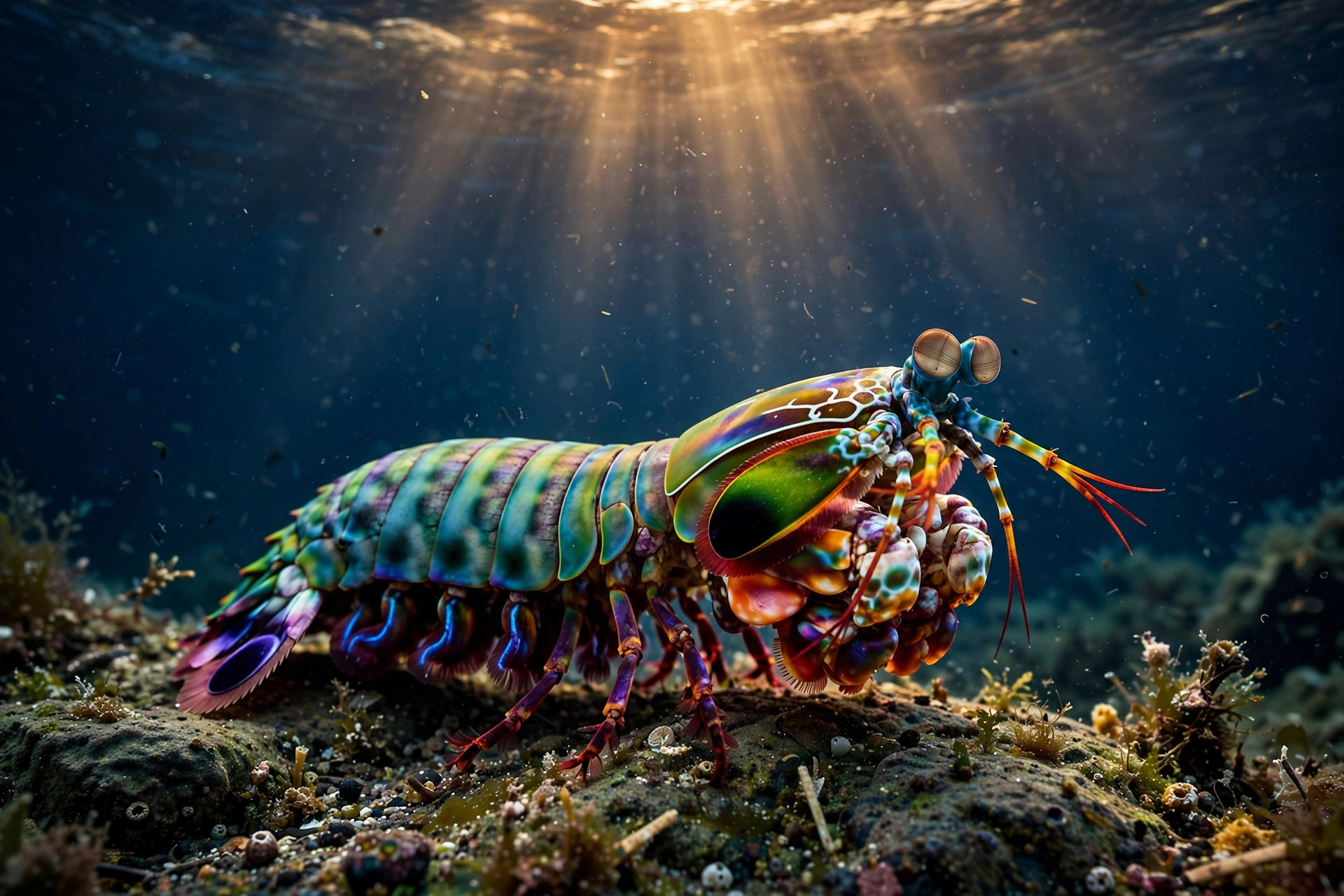
Humans see the world through three types of colour receptors — red, green and blue. The mantis shrimp, a small marine crustacean, has twelve to sixteen. It also sees ultraviolet light and detects polarised light. By receptor count, it owns the most complex visual system in the known animal kingdom.
What are all those channels for?
Each receptor type is tuned to a narrow slice of the spectrum. Where we blend three signals into every colour we perceive, the mantis shrimp samples the rainbow in far finer detail. Its stalked eyes move independently, giving it trinocular vision in each eye — depth perception without needing two eyes to cooperate.
Researchers believe this extravagant system evolved for communication. Many mantis shrimp species have vividly patterned bodies that reflect polarised and ultraviolet light — private signals visible only to each other, invisible to predators with simpler eyes.
The twist: they are worse at fine colour differences
Here is the surprise. In behavioural tests, mantis shrimp proved worse than humans at distinguishing between two similar colours. Scientists think that instead of comparing channels the way our brains do, the shrimp's nervous system reads each channel more like a simple "yes/no" signal — fast but crude. Evolution optimised for speed of recognition, not subtlety: when you punch with the force of a bullet, you need to decide quickly.
Why it matters
Engineers are already copying the mantis shrimp eye. Its ability to detect polarised light in a compact package has inspired new camera sensors for detecting cancerous tissue and improving underwater imaging. Nature's strangest eyes may end up saving human lives.
More mind-blowing facts
 Animals
Why Is Wombat Poop Cube-Shaped? The Only Animal That Does It
The wombat is the only animal on Earth known to produce cube-shaped droppings — and scientists finally figured out how.
 Space
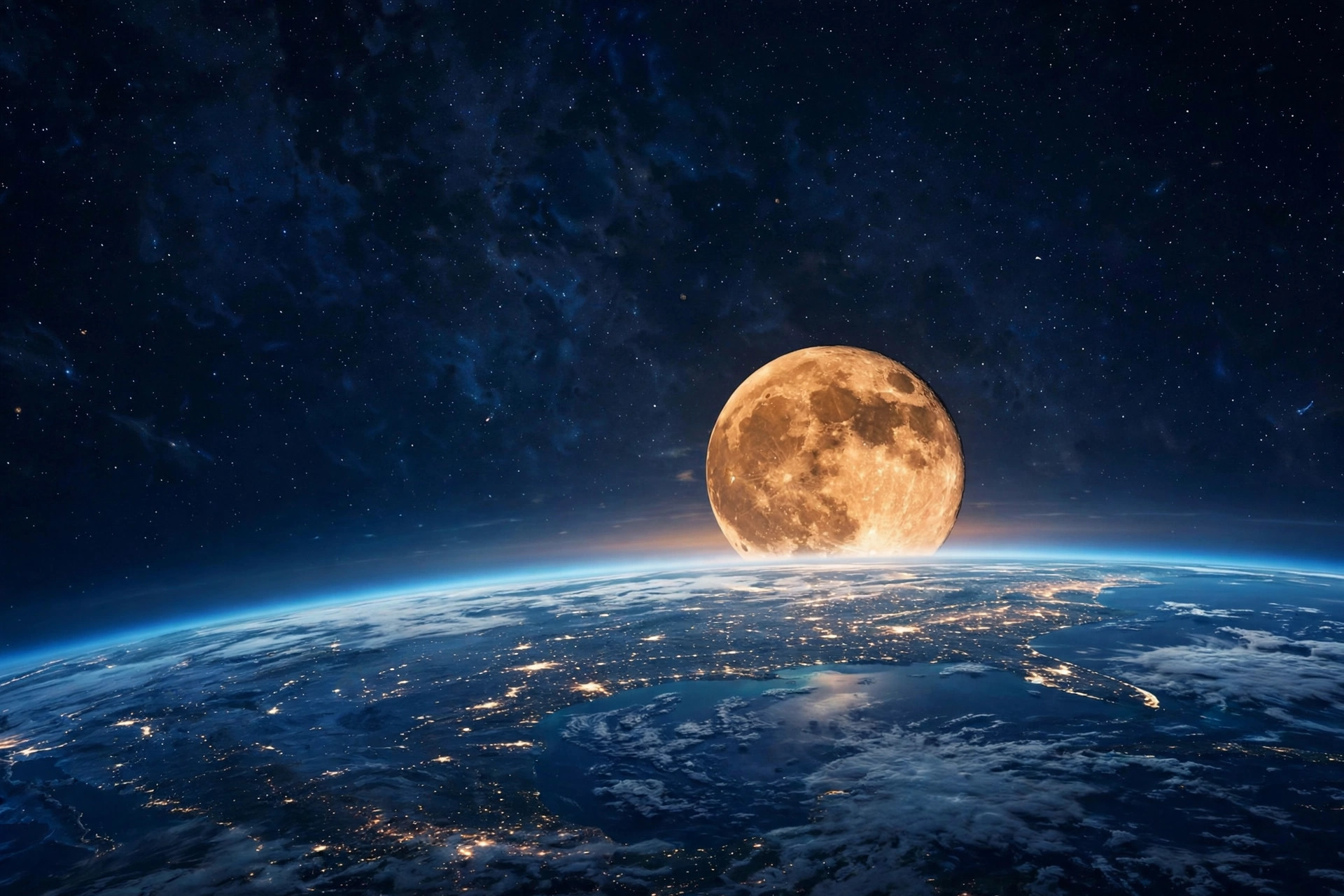
SpaceIs the Moon Drifting Away from Earth? Yes — 3.8 cm Every Year
The Moon drifts about 3.8 centimetres further from Earth every year. Apollo-era mirrors let scientists measure it to the millimetre.
 History
Oxford University Is Older Than the Aztec Empire
Teaching at Oxford began by 1096. The Aztec capital wasn't founded until 1325 — Oxford is older than the Aztec Empire by centuries.