How Many Bones Are Babies Born With? Around 300
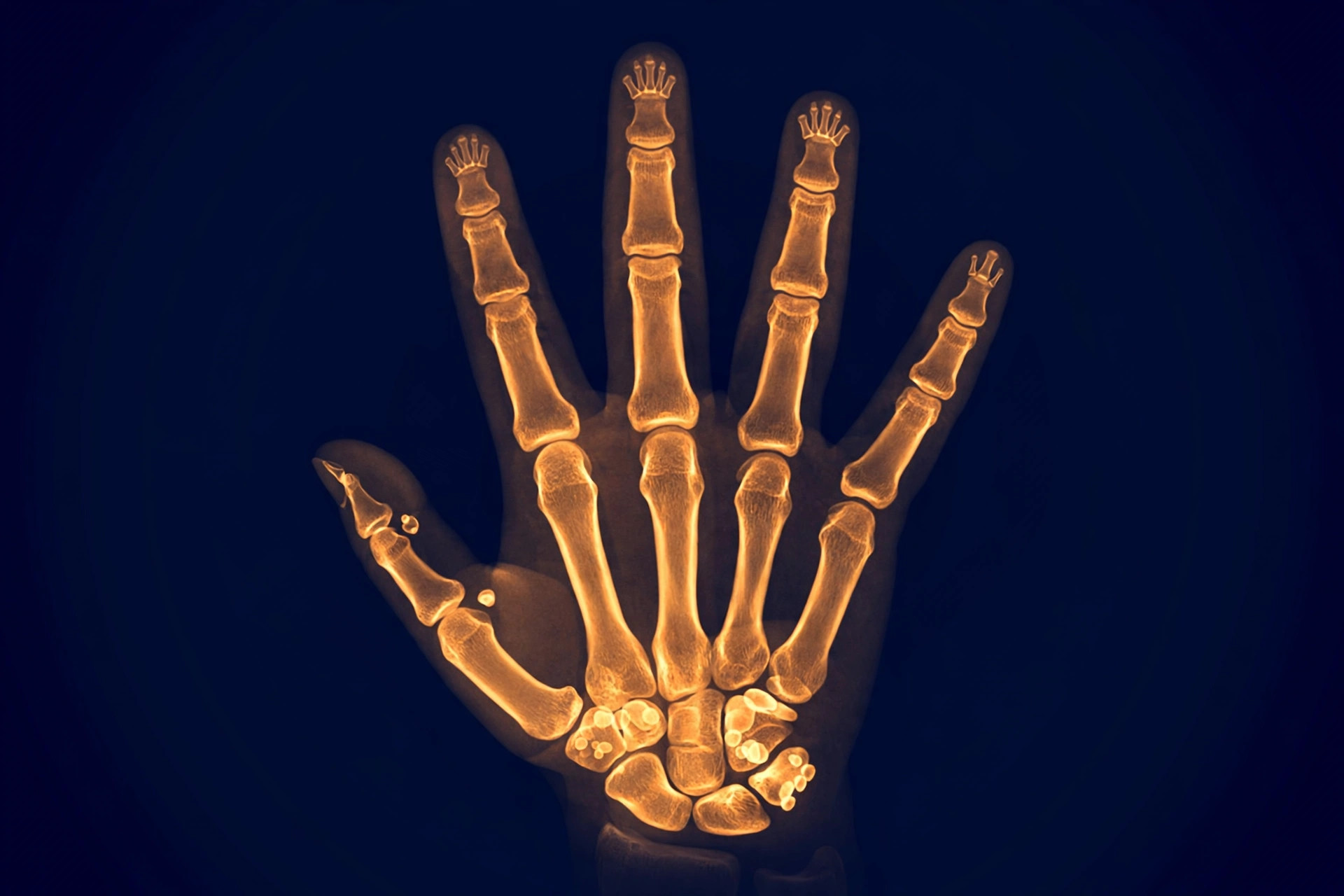
Babies are born with around 300 bones. You, reading this, probably have 206. Somewhere along the way, you lost nearly a hundred bones — or rather, they joined forces.
Where do the extra bones go?
Many of a baby's "bones" start out as cartilage, the flexible tissue in your nose and ears. As a child grows, a process called ossification gradually replaces cartilage with hard bone, and separate pieces fuse into single bones.
The skull is the best example. A newborn's skull is made of several bony plates with soft gaps — the fontanelles, or "soft spots" — that let the head compress during birth and leave room for the rapidly growing brain. Over the first couple of years, these plates knit together. Similar fusion happens in the spine, pelvis and long bones.
Why start with more pieces?
Flexibility. A baby built from many small, partly cartilaginous pieces can curl tightly in the womb and squeeze through the birth canal — something a rigid 206-bone skeleton could never do. The extra pieces are a feature, not a bug.
Does the number keep changing?
Most fusion is complete by the late teens or early twenties, settling at the adult count of 206. Some people keep small extra bones — like extra sesamoids in the feet — which is perfectly normal anatomical variation.
So you are literally built from more pieces than you keep: a 300-piece kit that assembles itself into a 206-piece adult.
More mind-blowing facts
 Animals
Why Is Wombat Poop Cube-Shaped? The Only Animal That Does It
The wombat is the only animal on Earth known to produce cube-shaped droppings — and scientists finally figured out how.
 Space
SpaceIs the Moon Drifting Away from Earth? Yes — 3.8 cm Every Year
The Moon drifts about 3.8 centimetres further from Earth every year. Apollo-era mirrors let scientists measure it to the millimetre.
 History
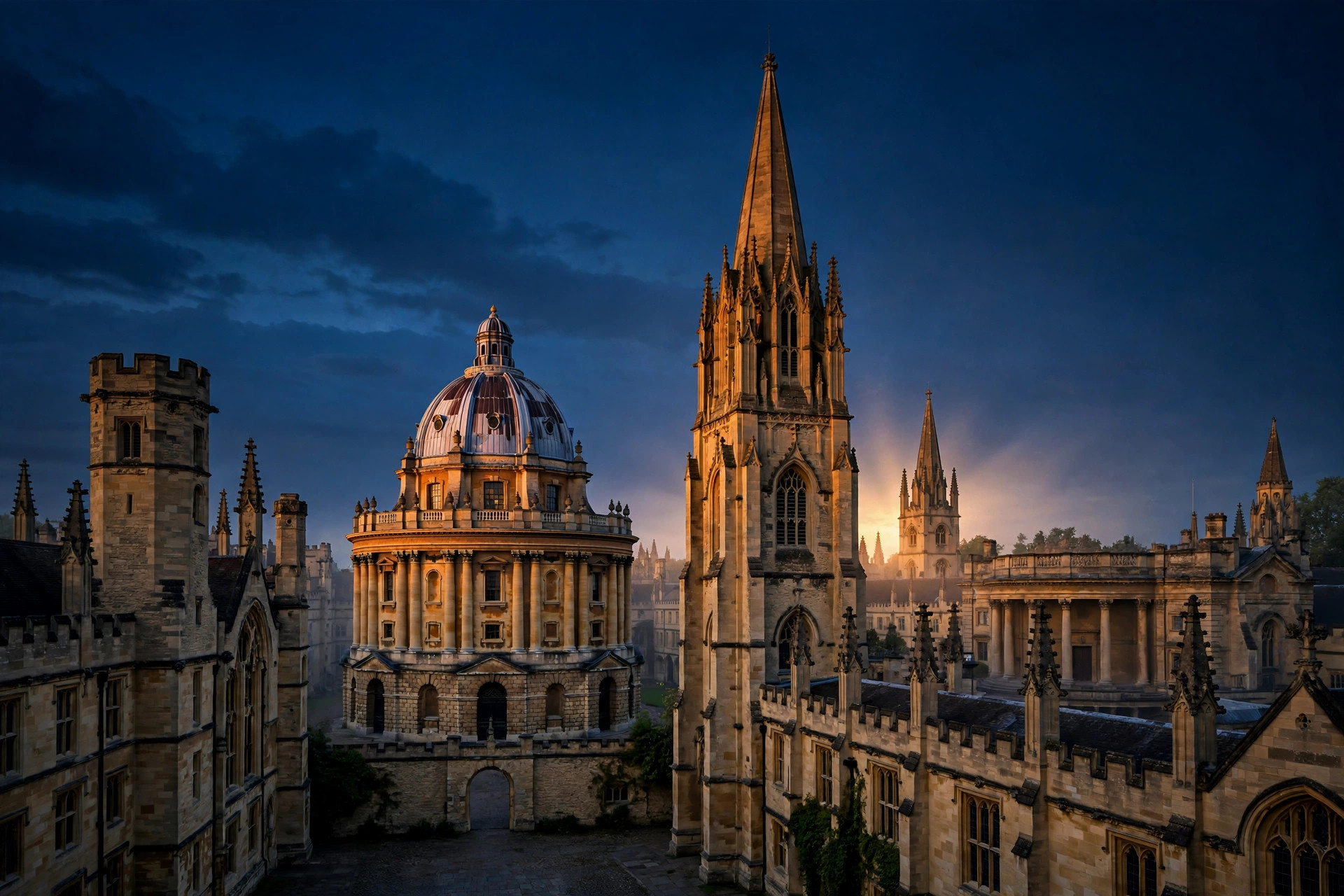
Oxford University Is Older Than the Aztec Empire
Teaching at Oxford began by 1096. The Aztec capital wasn't founded until 1325 — Oxford is older than the Aztec Empire by centuries.